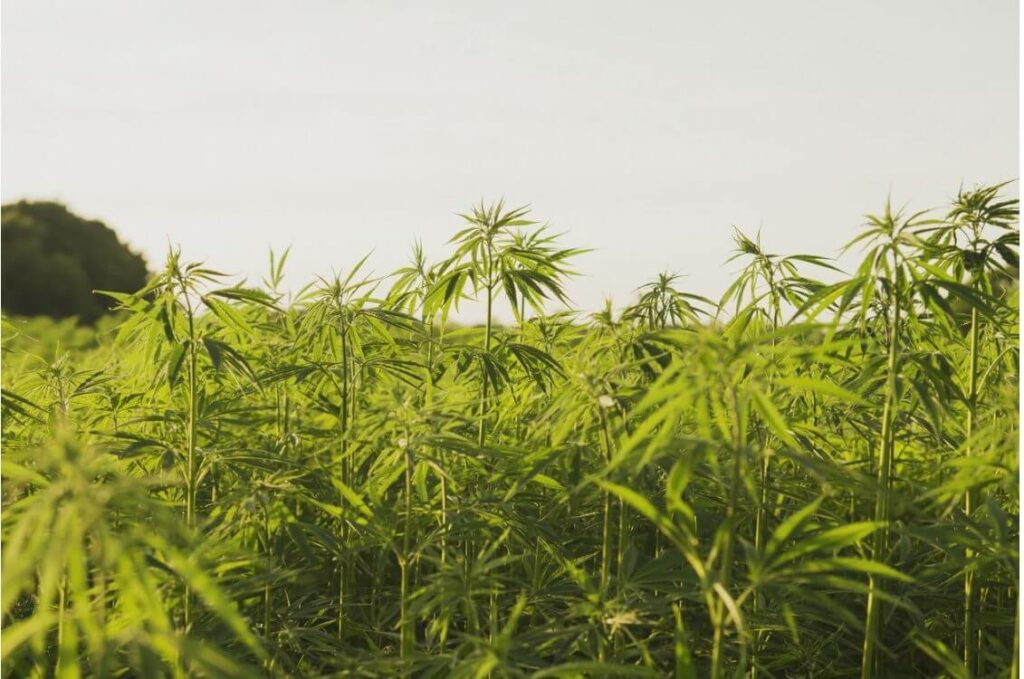
The short answer is yes, you can grow hemp in the UK. But the reality is far more complex than most people expect.
While hemp is often described as THC-free cannabis and widely recognised for its environmental and commercial benefits, growing it legally in the UK requires strict licensing, compliance, and ongoing oversight from the Home Office.
For many, the process can feel slow, restrictive, and heavily regulated.
Yet despite this, interest in hemp cultivation continues to grow. As demand for CBD products, sustainable materials, and alternative agriculture increases, more people are asking the same question:
Is it actually worth growing hemp in the UK, and what does it really involve?
In this guide, we break everything down clearly.
Hemp is a variety of the cannabis plant that is grown specifically for industrial, nutritional, and wellness purposes.
Unlike cannabis grown for recreational use, hemp contains very low levels of THC. In the UK, legal hemp must contain no more than 0.2% THC in the plant.
Hemp is one of the most versatile plants on earth.
In fact, hemp is estimated to have over 25,000 potential uses, making it one of the most economically valuable crops available.
Hemp is not just sustainable. It is actively beneficial.
For example, one acre of hemp can produce the same amount of paper as four acres of trees.
Yes, hemp cultivation is legal in the UK, but only under strict conditions.
| Type | Status in UK |
|---|---|
| High-THC cannabis | Illegal to grow |
| Low-THC hemp | Legal with licence |
You must obtain a Home Office licence before cultivation begins.
Important: You cannot freely harvest flowers or leaves for CBD extraction without additional licensing.
Apply here:
Hemp Growing Licence UK
Failure to comply can result in licence revocation.
While appealing, hemp farming comes with challenges:
Most UK hemp farms are:
CBD products are derived from hemp, but UK regulations limit how hemp can be used domestically.
Learn more:
CBD Oil Dosage Guide
| Type | Source | Contains CBD? |
|---|---|---|
| Hemp Oil | Seeds | No |
| CBD Oil | Flowers | Yes |
Read more:
Hemp vs CBD Oil Guide
Explore products:
CBD Vape Range
Hemp offers sustainability, versatility, and economic potential. But in the UK, it comes with strict regulation.
While legal, it is not straightforward.
For many, using hemp-derived products is far more practical than growing hemp itself.
Understanding where CBD comes from is the first step. Choosing the right products defines your experience.
To grow hemp legally in the UK, you must comply with strict regulations enforced by the Home Office. The primary requirement is that the cultivated hemp plants must contain no more than 0.2% THC. Furthermore, you must only plant seeds that are from approved industrial hemp varieties, and the crop must be grown exclusively for industrial use.
It is important to note that you cannot freely harvest the flowers or leaves of the hemp plant for CBD extraction without additional licensing. Before you begin any cultivation, you are required to secure a Home Office licence and inform your local police. During cultivation, you must notify the authorities of any changes to your location or schedule, comply with all licence conditions, and maintain approved crop visibility requirements. Failure to follow these rules can result in your licence being revoked.
Applying for a UK hemp growing licence involves submitting an application directly to the Home Office. As part of this process, you must provide full personal and business details, precise field locations and maps, the specific seed type and its THC content, and proof that the seeds come from an approved source. Additionally, a Disclosure and Barring Service (DBS) check is required.
The financial cost includes an initial application fee of £580. If you wish to continue growing hemp in subsequent years, you will need to pay an annual renewal fee of £326. Because of these setup costs and the complex application process, most hemp farms in the UK are currently run as commercial-scale operations or established agricultural businesses that focus primarily on fibre and seed production.
No, you cannot freely harvest the flowers or leaves of UK-grown hemp to extract CBD without acquiring additional specific licensing. Under standard UK hemp laws, the crop must be grown strictly for industrial use, and regulations severely limit how domestic hemp can be processed. Because of these strict barriers, CBD used in products sold in the UK is frequently imported from other countries or processed under separate specialist licences.
While hemp plants are the ultimate source of CBD, domestic cultivation is not always a viable route for local CBD extraction. If your primary goal is to easily extract CBD or if you require a simple, flexible cultivation setup, hemp farming in the UK is unlikely to be suitable for you. For the majority of people, buying pre-made, regulatory-compliant hemp-derived products is far more practical than attempting to grow and process the crop themselves.
The key differences between hemp oil and CBD oil lie in the part of the plant they are sourced from and their active cannabinoid content. Hemp oil is extracted exclusively from the seeds of the hemp plant. Because hemp seeds do not contain CBD, hemp oil itself is entirely CBD-free. It is commonly utilised for nutritional purposes, cosmetics, skincare, and food products.
In contrast, CBD oil is extracted from the flowers of the hemp plant. The flowers are rich in cannabinoids, meaning that CBD oil actually contains active CBD. This difference is crucial for consumers to understand when choosing wellness products, as only CBD oil will deliver the specific effects associated with cannabinoids. While both oils originate from the very same species of plant, their chemical profiles and ultimate uses are entirely distinct.
Hemp farming is highly sustainable and provides active environmental benefits. One of its most significant advantages is carbon absorption, as hemp plants absorb substantial amounts of CO2 during their rapid growth cycle. Additionally, the crop aids in soil regeneration by naturally fixing nitrogen, which actively improves the quality of the soil for future agricultural use.
Hemp is also naturally resistant to pests, which results in a very low requirement for chemical pesticides during its cultivation. Finally, hemp offers exceptional yield efficiency, producing far more usable material per acre than many traditional crops. For example, a single acre of hemp can produce the same quantity of paper as four acres of trees. These diverse qualities make hemp an exceptionally valuable and eco-friendly crop for sustainable industries including bioplastics, construction, and textiles.
To grow hemp legally in the UK, you must comply with strict regulations enforced by the Home Office. The primary requirement is that the cultivated hemp plants must contain no more than 0.2% THC. Furthermore, you must only plant seeds that are from approved industrial hemp varieties, and the crop must be grown exclusively for industrial use.
It is important to note that you cannot freely harvest the flowers or leaves of the hemp plant for CBD extraction without additional licensing. Before you begin any cultivation, you are required to secure a Home Office licence and inform your local police. During cultivation, you must notify the authorities of any changes to your location or schedule, comply with all licence conditions, and maintain approved crop visibility requirements. Failure to follow these rules can result in your licence being revoked.
Applying for a UK hemp growing licence involves submitting an application directly to the Home Office. As part of this process, you must provide full personal and business details, precise field locations and maps, the specific seed type and its THC content, and proof that the seeds come from an approved source. Additionally, a Disclosure and Barring Service (DBS) check is required.
The financial cost includes an initial application fee of £580. If you wish to continue growing hemp in subsequent years, you will need to pay an annual renewal fee of £326. Because of these setup costs and the complex application process, most hemp farms in the UK are currently run as commercial-scale operations or established agricultural businesses that focus primarily on fibre and seed production.
No, you cannot freely harvest the flowers or leaves of UK-grown hemp to extract CBD without acquiring additional specific licensing. Under standard UK hemp laws, the crop must be grown strictly for industrial use, and regulations severely limit how domestic hemp can be processed. Because of these strict barriers, CBD used in products sold in the UK is frequently imported from other countries or processed under separate specialist licences.
While hemp plants are the ultimate source of CBD, domestic cultivation is not always a viable route for local CBD extraction. If your primary goal is to easily extract CBD or if you require a simple, flexible cultivation setup, hemp farming in the UK is unlikely to be suitable for you. For the majority of people, buying pre-made, regulatory-compliant hemp-derived products is far more practical than attempting to grow and process the crop themselves.
The key differences between hemp oil and CBD oil lie in the part of the plant they are sourced from and their active cannabinoid content. Hemp oil is extracted exclusively from the seeds of the hemp plant. Because hemp seeds do not contain CBD, hemp oil itself is entirely CBD-free. It is commonly utilised for nutritional purposes, cosmetics, skincare, and food products.
In contrast, CBD oil is extracted from the flowers of the hemp plant. The flowers are rich in cannabinoids, meaning that CBD oil actually contains active CBD. This difference is crucial for consumers to understand when choosing wellness products, as only CBD oil will deliver the specific effects associated with cannabinoids. While both oils originate from the very same species of plant, their chemical profiles and ultimate uses are entirely distinct.
Hemp farming is highly sustainable and provides active environmental benefits. One of its most significant advantages is carbon absorption, as hemp plants absorb substantial amounts of CO2 during their rapid growth cycle. Additionally, the crop aids in soil regeneration by naturally fixing nitrogen, which actively improves the quality of the soil for future agricultural use.
Hemp is also naturally resistant to pests, which results in a very low requirement for chemical pesticides during its cultivation. Finally, hemp offers exceptional yield efficiency, producing far more usable material per acre than many traditional crops. For example, a single acre of hemp can produce the same quantity of paper as four acres of trees. These diverse qualities make hemp an exceptionally valuable and eco-friendly crop for sustainable industries including bioplastics, construction, and textiles.
Please note: This blog post reflects historical data predating recent changes in cannabinoid laws, medical cannabis regulations, and some of our best CBD product names, strengths, and formulations. These historical blogs remain as a reference post our website update, but they might contain outdated information. Discover our updated CBD and legal cannabinoid products for the best CBD experience.

Message us directly
I will be back soon

