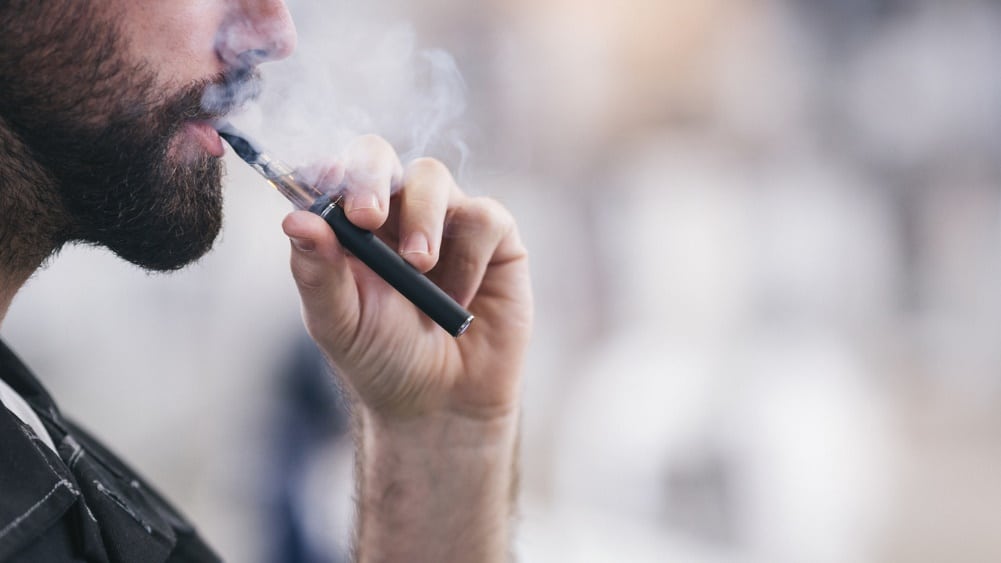
As a newcomer, navigating the world of vape juice can be a bit daunting. There’s a lot of jargon involved. What on earth is vegetable glycerine? And do you have to mix your own vape juice or can you buy one pre-made? Come to think of it, what is in vape juice to begin with?
Learning about the compounds that make up vape juice can affect your vaping experience positively, as it’ll help you to achieve the perfect balance of throat hit and vapour. Read on to find out more.
VG and PG are odourless liquids that combine with a flavour and CBD to create a CBD vape juice. VG and PG are sugar alcohols, so whilst they won’t get you inebriated, it’s important to be careful when vaping if you experience blood sugar conditions such as diabetes.
VG and PG are the compounds that produce vapour when they’re heated, which allows them to be inhaled and exhaled with ease. The two fluids have a different consistency and taste to one another, so they work well together to create the full vaping experience that is loved all over the world.
How much you choose to vape of each liquid is completely dependent on your own preference, so if you decide to mix your own, it’s important to get it right so that you can have the best vaping experience possible.
PG stands for propylene glycol – it’s actually a compound by-product of petroleum, but has no odour or colour meaning that it’s ideal for flavour concentrates. In vaping, PG provides the ‘throat hit’ that so many people associate with smoking. Others say it makes them cough. PG is also used in household products like toothpaste, shampoo and nicotine inhalers – it’s a common occurrence in 21st century life.
In initial studies, PG appears to be safe – but even so, more studies are needed to fully appreciate the effects of the substance on the human body, long-term.
A study of the long term toxicity of PG on rats showed that ingested PG had no adverse health effects on the rats – although it did test a relatively small sample. Not many studies exist that have looked at the effects of inhaling PG, apart from a long-term experiment held in 1947 on monkeys and rats that showed no essential differences between the test and control groups.
If you have side effects to vaping, it is possible that you’re having an allergic reaction to PG. Stop vaping immediately and consult your GP for advice. This is however extremely rare!
VG stands for vegetable glycerine – a naturally occurring chemical that’s derived from vegetable oils. In e-liquid, it’s used to thicken the vape juice. VG smoothens the throat hit that PG brings to the vape, and provides the vapour hit that so many people love.
It is not commonly possible to buy a flavoured VG liquid, so at this point in time, most e-liquids are made of a combination of the two. The compound can also be found in sweetener, beauty products, soap, gel substances and toothpaste.
However, similar to PG, there are limited studies that show the impact of VG inhalation. A study on the inhalation of glycerine in rats showed that there was limited effects on their lungs. But just like PG, more studies need to be done in order to fully understand the long-term effects of inhalation of vegetable glycerine.
Now that you understand what PG and VG are and how they affect your vaping experience, you might be wondering what other CBD formats are available beyond traditional e-liquids.
For more concentrated options, explore our range of CBD concentrates, designed for advanced users seeking higher potency and custom formulations.
If you prefer a non-vape approach entirely, our CBD oil drops offer a simple and effective way to incorporate CBD into your daily routine without PG or VG.
Understanding the differences between formats allows you to choose what works best for your lifestyle, whether that’s vaping, oral use, or combining both methods.
If you’re continuing your CBD vaping journey, choosing the right product is just as important as understanding the ingredients. You can browse our full selection of CBD vape juice or explore premium CBD vape e-liquids available in a variety of strengths and flavours.
For a more convenient setup, take a look at our CBD vape cartridges or browse compatible CBD cartridge systems designed for ease of use and consistency.
If flavour is a priority, our range of fruity CBD vape juice offers vibrant profiles crafted to enhance your vaping experience.
To take things further, you can also explore cannabis-derived terpenes (CDTs), which add authentic strain-specific aroma and depth to your vape formulations.
If you’re deciding between different device types, our guide on disposable vs rechargeable CBD vapes breaks down the pros and cons of each.
Still have questions? Visit our CBD FAQ page for clear answers on usage, legality, and product selection.
Propylene glycol (PG) and vegetable glycerine (VG) serve different purposes in vape juice, primarily affecting consistency, throat hit, and vapour production. PG is a thinner, colourless petroleum by-product that delivers a pronounced throat hit, similar to the sensation of smoking, whilst carrying flavour concentrates highly effectively.
Conversely, VG is a thicker, naturally occurring liquid derived from vegetable oils. Its primary role is to thicken the e-liquid, smoothen the sharp throat hit of PG, and generate the dense clouds of vapour that many users prefer. Because VG is difficult to flavour on its own, the majority of commercially available e-liquids utilise a blend of both compounds to achieve a balanced vaping experience. By adjusting the ratio of these two sugar alcohols, you can easily customise your vape to suit your personal preferences, allowing you to find the perfect middle ground.
Initial scientific research suggests that propylene glycol (PG) is safe, though more comprehensive studies are still required to understand its long-term effects on the human body fully. A study examining the long-term toxicity of ingested PG in rats revealed no adverse health effects, although the research only involved a relatively small sample group.
Regarding inhalation specifically, research is somewhat limited, but a long-term experiment conducted in 1947 on monkeys and rats showed no essential differences between the test and control subjects. Whilst PG is commonly used in everyday household items like toothpaste, shampoo, and nicotine inhalers, some users might experience side effects. If you suspect you are having an allergic reaction to PG, which is extremely rare, you should stop vaping immediately and consult your GP for professional medical advice to ensure your safety.
If you have diabetes or another blood sugar condition, you must exercise caution when vaping. Both vegetable glycerine (VG) and propylene glycol (PG) are classified as sugar alcohols. Although they are odourless liquids that cannot cause inebriation, their chemical classification means they could potentially impact people with blood sugar sensitivities, making careful monitoring necessary.
These two fluids are heated to produce the vapour that allows CBD and flavourings to be inhaled easily. While they are highly effective at delivering your vape dose, you should pay close attention to how your body reacts to them. If you prefer to avoid the potential risks associated with inhaling these sugar alcohols altogether, you might want to explore alternative CBD formats. For example, CBD oil drops are taken orally and offer an effective daily routine completely free of both PG and VG.
Propylene glycol (PG) and vegetable glycerine (VG) are incredibly common ingredients that you likely encounter every day outside of vaping. PG is a petroleum by-product that is highly effective at holding flavour concentrates, which explains its widespread use in standard consumer goods. You can regularly find PG in common household items, including everyday toothpaste, shampoos, and medical nicotine inhalers.
Vegetable glycerine is also highly prevalent across many manufacturing sectors because of its natural, thickening properties. Derived from vegetable oils, VG acts as an excellent thickening agent and is frequently utilised in food sweeteners, beauty products, cosmetics, soaps, and various gel substances. Both of these versatile compounds have been thoroughly integrated into 21st-century manufacturing, meaning they are well-established in consumer products before ever being utilised to help create modern CBD e-liquids and vape juices.
If you prefer to avoid propylene glycol (PG) and vegetable glycerine (VG) entirely, there are several alternative CBD formats available to suit your lifestyle. One of the most straightforward, non-vape options is using oral CBD oil drops. These drops allow you to easily incorporate CBD into your daily routine, providing an effective way to consume cannabinoids without inhaling any PG or VG.
For those who still wish to vape but want to steer clear of traditional e-liquids, highly concentrated CBD options like CBD concentrates are available. These products are specifically designed for more advanced users who are seeking stronger potencies and custom formulations. By exploring these diverse formats, you can easily find a high-quality CBD solution that fits your exact health preferences, whether that involves sublingual oral drops, advanced concentrates, or a combination of both methods.
Propylene glycol (PG) and vegetable glycerine (VG) serve different purposes in vape juice, primarily affecting consistency, throat hit, and vapour production. PG is a thinner, colourless petroleum by-product that delivers a pronounced throat hit, similar to the sensation of smoking, whilst carrying flavour concentrates highly effectively.
Conversely, VG is a thicker, naturally occurring liquid derived from vegetable oils. Its primary role is to thicken the e-liquid, smoothen the sharp throat hit of PG, and generate the dense clouds of vapour that many users prefer. Because VG is difficult to flavour on its own, the majority of commercially available e-liquids utilise a blend of both compounds to achieve a balanced vaping experience. By adjusting the ratio of these two sugar alcohols, you can easily customise your vape to suit your personal preferences, allowing you to find the perfect middle ground.
Initial scientific research suggests that propylene glycol (PG) is safe, though more comprehensive studies are still required to understand its long-term effects on the human body fully. A study examining the long-term toxicity of ingested PG in rats revealed no adverse health effects, although the research only involved a relatively small sample group.
Regarding inhalation specifically, research is somewhat limited, but a long-term experiment conducted in 1947 on monkeys and rats showed no essential differences between the test and control subjects. Whilst PG is commonly used in everyday household items like toothpaste, shampoo, and nicotine inhalers, some users might experience side effects. If you suspect you are having an allergic reaction to PG, which is extremely rare, you should stop vaping immediately and consult your GP for professional medical advice to ensure your safety.
If you have diabetes or another blood sugar condition, you must exercise caution when vaping. Both vegetable glycerine (VG) and propylene glycol (PG) are classified as sugar alcohols. Although they are odourless liquids that cannot cause inebriation, their chemical classification means they could potentially impact people with blood sugar sensitivities, making careful monitoring necessary.
These two fluids are heated to produce the vapour that allows CBD and flavourings to be inhaled easily. While they are highly effective at delivering your vape dose, you should pay close attention to how your body reacts to them. If you prefer to avoid the potential risks associated with inhaling these sugar alcohols altogether, you might want to explore alternative CBD formats. For example, CBD oil drops are taken orally and offer an effective daily routine completely free of both PG and VG.
Propylene glycol (PG) and vegetable glycerine (VG) are incredibly common ingredients that you likely encounter every day outside of vaping. PG is a petroleum by-product that is highly effective at holding flavour concentrates, which explains its widespread use in standard consumer goods. You can regularly find PG in common household items, including everyday toothpaste, shampoos, and medical nicotine inhalers.
Vegetable glycerine is also highly prevalent across many manufacturing sectors because of its natural, thickening properties. Derived from vegetable oils, VG acts as an excellent thickening agent and is frequently utilised in food sweeteners, beauty products, cosmetics, soaps, and various gel substances. Both of these versatile compounds have been thoroughly integrated into 21st-century manufacturing, meaning they are well-established in consumer products before ever being utilised to help create modern CBD e-liquids and vape juices.
If you prefer to avoid propylene glycol (PG) and vegetable glycerine (VG) entirely, there are several alternative CBD formats available to suit your lifestyle. One of the most straightforward, non-vape options is using oral CBD oil drops. These drops allow you to easily incorporate CBD into your daily routine, providing an effective way to consume cannabinoids without inhaling any PG or VG.
For those who still wish to vape but want to steer clear of traditional e-liquids, highly concentrated CBD options like CBD concentrates are available. These products are specifically designed for more advanced users who are seeking stronger potencies and custom formulations. By exploring these diverse formats, you can easily find a high-quality CBD solution that fits your exact health preferences, whether that involves sublingual oral drops, advanced concentrates, or a combination of both methods.
Please note: This blog post reflects historical data predating recent changes in cannabinoid laws, medical cannabis regulations, and some of our best CBD product names, strengths, and formulations. These historical blogs remain as a reference post our website update, but they might contain outdated information. Discover our updated CBD and legal cannabinoid products for the best CBD experience.

Message us directly
I will be back soon

