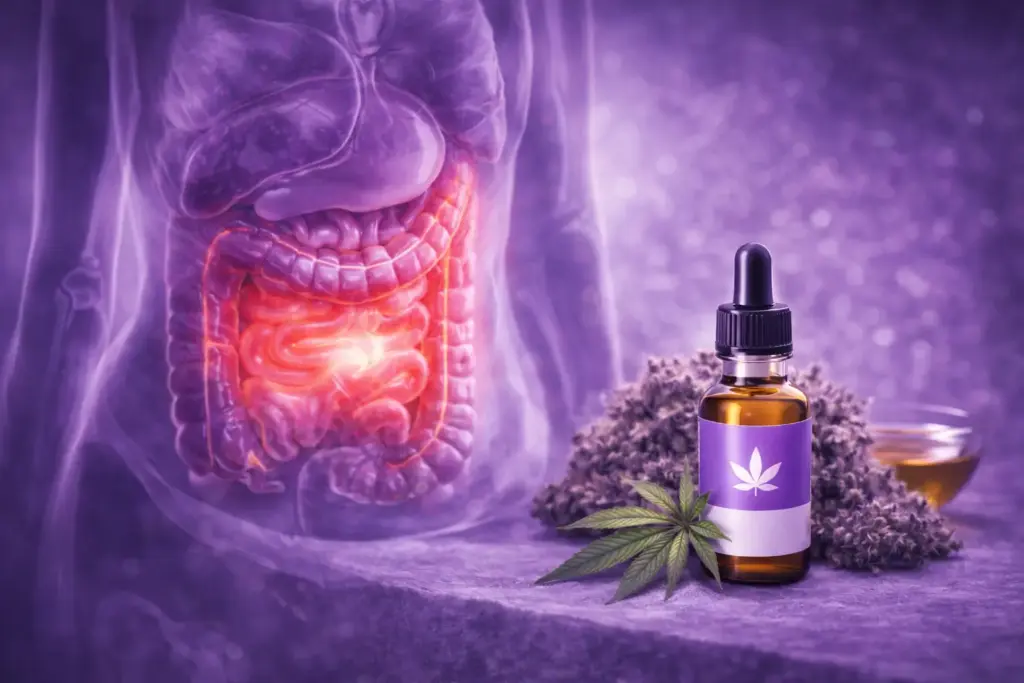
Irritable bowel syndrome, more commonly called IBS, affects a huge number of people across the UK, yet it is still one of the most misunderstood digestive conditions.
Many people live with symptoms for years without fully understanding what is driving them.
Bloating after meals, abdominal discomfort, irregular bowel habits, visible stomach distension, food sensitivity, and a general feeling that the gut is never quite settled can become part of daily life.
One of the most useful ways to understand IBS is to look at the connection between IBS and inflammation.
While IBS is not usually classified as an inflammatory bowel disease in the same category as Crohn’s disease or ulcerative colitis, that does not mean inflammation is irrelevant.
In fact, low-grade inflammation, immune activation, stress-related gut disruption, and changes to the intestinal barrier all appear to play a role in many people with IBS.
This is where the topic gets interesting. IBS is often spoken about as if it is simply “a sensitive stomach” or a vague reaction to stress.
In reality, it is far more complex than that. The gut, the immune system, the nervous system, sleep, diet, and stress all interact with one another.
When that system becomes disrupted, inflammation can become part of the picture even if scans and routine testing do not show obvious structural damage.
This guide looks at IBS and inflammation in a practical, evidence-aware, lifestyle-focused way.
You will learn what IBS actually is, how inflammation may influence symptoms, what foods commonly make things worse, how stress and sleep fit into the picture, and what a realistic daily routine for better gut health can look like.
The aim is not hype. The aim is clarity, structure, and useful information you can actually apply.
IBS is a functional digestive disorder. That means the digestive tract usually appears structurally normal, but it does not function normally.
In other words, the gut can be overly reactive, more sensitive than it should be, and inconsistent in the way it moves food and waste through the body.
IBS is commonly associated with:
According to the NHS, IBS is common and can affect people of all ages, though it is often identified in younger and middle-aged adults.
For some people, symptoms are mild and mainly inconvenient. For others, IBS can affect confidence, work, travel, social plans, sleep, and mood.
That is one reason why it needs to be taken seriously even though it is often described casually.
IBS is usually diagnosed after other conditions have been ruled out. This matters because many symptoms overlap with other digestive issues.
Ongoing abdominal pain, bloating, or altered bowel habits do not automatically mean IBS.
Coeliac disease, inflammatory bowel disease, infections, bile acid issues, food intolerance, and other causes may need to be considered too.
One of the biggest sources of confusion is the difference between IBS and IBD. They sound similar, but they are not the same thing.
IBD stands for inflammatory bowel disease and includes conditions such as Crohn’s disease and ulcerative colitis. These conditions involve clear, measurable inflammation that can damage the gut lining.
They often show up on scans, scopes, blood tests, biopsies, or stool markers.
IBS, by contrast, does not usually show the same obvious damage. That is why it has traditionally been called “functional” rather than inflammatory.
However, newer research suggests the story is not that simple.
Many IBS sufferers appear to have subtle immune activity and low-grade inflammation that may not be dramatic enough to classify as IBD, but is still significant enough to alter gut function.
This distinction matters because people with IBS are often told that “nothing is wrong” when what is really meant is “nothing severe has shown up on the standard tests.”
Those are not the same thing. A gut can be functionally disrupted, hypersensitive, and mildly inflamed without showing severe disease.
The better question is not whether IBS is a classic inflammatory disease, but whether inflammation contributes to IBS symptoms. The answer appears to be yes, at least in many cases.
Researchers have increasingly identified low-grade inflammation in some IBS patients. This includes subtle increases in immune cells, inflammatory signalling molecules, and changes in the gut barrier.
It is not the kind of aggressive inflammation associated with severe bowel disease, but it may be enough to make the digestive tract more reactive and more sensitive to normal digestive processes.
That helps explain why some people with IBS react so strongly to foods, stress, poor sleep, alcohol, caffeine, or hormonal fluctuations.
Their gut may already be in a heightened state of sensitivity. When something adds another layer of irritation, symptoms flare.
This is also why broader lifestyle support matters so much. If IBS symptoms are influenced by inflammation, then calming the gut environment becomes a sensible goal.
That does not mean chasing miracle fixes. It means building habits that reduce irritation and support recovery over time.
For a broader overview of inflammation itself, read our guide to reducing inflammation naturally.
The gut is lined with immune cells, nerve endings, bacteria, digestive secretions, and a barrier designed to control what passes into the bloodstream.
When that system is working well, digestion feels uneventful. When it is disrupted, symptoms can build quickly.
Low-grade inflammation may affect IBS in several ways.
That final point is especially important. IBS is not only about what you eat. It is also about how your nervous system responds.
Stress, hypervigilance, poor sleep, anxiety, and overstimulation can all contribute to a gut that feels permanently “on edge.”
The gut and the brain are deeply connected through the gut-brain axis. This is a communication system involving nerves, hormones, immune messengers, and microbial signals.
It is one reason why stress can affect digestion so quickly.
Many people with IBS already know this from experience. A stressful meeting, bad night’s sleep, travel day, family argument, or period of overwork can trigger bloating, urgency, pain, or digestive disruption almost immediately.
Stress influences inflammation, but it also changes motility, stomach acid, muscle tension, and how strongly the gut reacts to ordinary signals.
That is why IBS often feels worse during pressured periods even when food has not changed much.
This is also why improving sleep and evening recovery can be surprisingly powerful. If the nervous system never properly switches out of stress mode, the gut rarely gets a chance to settle.
If sleep is part of your issue, read how to sleep better and switch off properly.
There is no universal IBS diet that works for everyone, but there are common food categories that regularly trigger symptoms.
These are worth watching closely if you are trying to reduce gut inflammation and improve day-to-day stability.
Common IBS trigger foods in the UK include:
Many of these fall under what is known as the FODMAP category.
FODMAPs are fermentable carbohydrates that can be poorly absorbed in the small intestine and rapidly fermented in the large intestine, leading to gas, bloating, pain, and bowel disruption.
The low FODMAP diet is often used short term to identify IBS triggers. It can be effective, but it should ideally be done carefully, as it is restrictive and not intended as a permanent forever diet.
The bigger goal is not to become afraid of food. It is to identify your specific triggers, reduce unnecessary gut stress, and build a way of eating that feels sustainable.
Alongside identifying triggers, it is helpful to think about foods that support digestion rather than aggravate it.
The exact list varies by person, but many people with IBS do better with simpler meals based around whole foods.
Commonly well-tolerated choices include:
Warm, simple meals are often easier on the digestive system than rushed, heavy, or highly processed foods.
Meal timing matters too. Large meals eaten quickly can aggravate IBS even when the ingredients themselves are not especially problematic.
Reducing IBS symptoms naturally is less about finding one magic ingredient and more about reducing the total load on the gut.
When inflammation, stress, poor sleep, and dietary triggers all combine, symptoms often become much worse. When those pressures are reduced together, the gut often becomes more stable.
If your digestion feels chaotic, simplicity helps. Focus on a smaller group of reliable foods, then expand gradually. This gives your gut a chance to settle and makes it easier to spot genuine triggers.
Fast eating increases swallowed air, reduces digestive awareness, and often worsens bloating. Slowing down is one of the simplest and most overlooked ways to reduce digestive stress.
Sleep affects inflammation, stress regulation, pain sensitivity, and gut function. Poor sleep can quickly worsen IBS. Better sleep often improves symptoms far beyond what people expect.
You may not be able to eliminate stress, but you can reduce how much it accumulates in the body. Regular breathing work, walking, less late-night screen exposure, and a calmer evening routine all help.
Gentle movement improves motility and circulation. Walking after meals is particularly useful for some people with IBS, especially when bloating and sluggish digestion are major issues.
A daily routine can make a huge difference because the gut likes rhythm. Irregular eating, poor sleep, skipped meals, and stress spikes all make digestion more erratic.
A structured day gives the digestive system predictability.
A simple IBS-friendly daily routine might look like this:
That might sound basic, but basic things done consistently often beat complicated health plans that never become habits.
As interest in gut health grows, people also become more curious about broader plant-based wellness compounds. One area receiving more attention is terpenes.
These are aromatic compounds found in many plants and are part of the wider conversation around how plants interact with the body.
Popular terpene profiles include:
If you want to understand more about how terpenes are discussed in wellness and botanical product conversations, read our terpene guide.
Some people who are exploring gut health, stress, and inflammation also become interested in the endocannabinoid system and cannabinoids such as CBD.
This is usually because the endocannabinoid system is involved in regulation across digestion, mood, immune balance, and stress response.
This does not mean every IBS issue leads back to cannabinoids, and it does not turn CBD into a cure.
It simply means that some people looking at broader lifestyle support become interested in that system too, particularly when stress, sleep, and internal balance all seem linked.
If you want to understand that body system more clearly, read our guide to the endocannabinoid system.
Can inflammation cause IBS symptoms?
Low-grade inflammation may contribute to IBS symptoms by increasing gut sensitivity, altering motility, and disrupting the gut barrier.
IBS is not the same as inflammatory bowel disease, but inflammation can still be part of the picture.
What foods should people with IBS avoid in the UK?
Common triggers include onions, garlic, beans, processed foods, artificial sweeteners, alcohol, caffeine, fatty takeaway meals, and certain dairy products.
Individual tolerance varies, so tracking your own responses matters.
Can stress really make IBS worse?
Yes. The gut and brain are directly connected. Stress can affect inflammation, motility, digestive sensitivity, and bowel habits, which is why IBS often worsens during pressured periods.
How do I calm an IBS flare-up naturally?
For many people, the most helpful steps are simplifying meals, reducing stress, staying hydrated, using gentle movement such as walking, and prioritising sleep.
Long-term improvement usually comes from consistent habits rather than one-off interventions.
When should I see a doctor instead of assuming it is IBS?
You should seek medical advice for blood in the stool, unexplained weight loss, severe or worsening pain, persistent diarrhoea, fever, or symptoms that are new and ongoing.
IBS should not be self-diagnosed when red-flag symptoms are present.
IBS is complex, but inflammation is clearly part of the puzzle for many people.
That does not mean every case of IBS should be treated like an inflammatory disease, but it does mean the old idea of IBS being “just stress” or “just a sensitive stomach” is far too simplistic.
When you look at IBS through the lens of gut irritation, low-grade inflammation, nervous system stress, food sensitivity, and sleep disruption, symptoms often start to make much more sense.
More importantly, the path forward becomes clearer too.
Improve the quality of what you eat. Reduce obvious gut irritants. Build a calmer daily rhythm. Sleep better.
Manage stress earlier, not only once symptoms flare. Keep meals simpler while you identify what your body actually tolerates.
That is where real progress usually begins. Not with hype, not with panic, and not with trying ten things at once. Just steady, informed changes that reduce the total pressure on the gut.

Message us directly
I will be back soon

