Working out the right CBD dosage can feel overwhelming when you first open a bottle of CBD oil.
With products ranging from 300 mg to 3,000 mg per bottle and doses in clinical trials spanning 5 mg to 900 mg, it’s no wonder people ask: how much CBD should I take?
This guide breaks down everything you need to know about finding your ideal CBD dosage, from practical starting points to calculating doses based on body weight, product type, and your specific wellness goals.
There is no one-size-fits-all CBD dose. Individual body chemistry, the severity of symptoms, and the specific CBD products you choose all play a role.
However, there are safe starting ranges based on UK guidance that give you a reliable foundation.
For most healthy adults, a practical starting dose is 20–25 mg of CBD per day. You can take this as a single dose or split it into two doses (for example, 10–15 mg in the morning and 10–15 mg in the evening).
This amount of CBD sits comfortably within recognised safety limits while giving your body enough to potentially notice effects.
From this starting point, you can gradually increase by 5 mg every 3–4 days or weekly until you notice the desired effects.
The key limit to remember: the UK Food Standards Agency advises healthy adults not to exceed 70 mg of CBD per day unless under medical supervision.
Here’s a concrete example. A 70 kg adult might begin at 25 mg daily for one week.
If they don’t notice sufficient benefits, they could move to 30–35 mg the following week, then 40–45 mg if needed, always staying below the 70 mg daily ceiling.
The simple framework:
CBD, short for cannabidiol, is a non-intoxicating compound extracted from the hemp plant. Unlike THC (tetrahydrocannabinol), CBD doesn’t produce a “high.”
In the UK, CBD products are legal provided they contain less than 0.2% THC in the original cannabis plant and meet finished-product compliance standards.
CBD works primarily through interaction with the endocannabinoid system (ECS), a complex network that helps regulate mood, pain perception, sleep, and immune function.
The ECS includes cannabinoid receptors known as CB1 (concentrated in the brain and nervous system) and CB2 (found mainly in immune cells and peripheral tissues).
CBD also influences enzymes like FAAH, which break down the body’s own cannabinoids. This interaction is how CBD affects various physiological processes, though research is still uncovering the precise mechanisms.
When discussing CBD dosage, we always measure in milligrams (mg) of CBD, not in “drops” or “bottles.”
This distinction matters because different products deliver vastly different mg per serving.
A few drops from a 500 mg bottle delivers far less CBD than the same number of drops from a 3,000 mg bottle.
Research between 2010 and 2023 has used a remarkably wide range of doses. Some clinical trials administered 300–600 mg or more for conditions like epilepsy and schizophrenia.
However, everyday wellness use typically involves much lower amounts, generally 10–70 mg per day.
Understanding this gap helps set realistic expectations: what works in controlled research settings often differs from what’s appropriate for daily self-care.
Finding your optimal CBD oil dosage is a personal process. How much CBD you ultimately need depends on factors including body weight, metabolism, the severity of your symptoms, and the type of CBD products you’re using.
Someone using CBD for mild everyday stress will likely need less than someone managing severe pain.
That said, a clear step-by-step framework takes the guesswork out of the process.
Step 1: Start with 20–25 mg per day for most adults. This is a low dose that minimises the risk of side effects while providing enough CBD to gauge your response.
Step 2: Stay at this level for 3–7 days while paying attention to how you feel. Note any changes in mood, pain levels, sleep quality, or other symptoms you’re tracking.
Step 3: If you’re not noticing the desired effects, increase by 5 mg increments every 3 – 4 days. This “start low and go slow” approach lets you find your correct dosage without overshooting.
Step 4: Do not exceed 70 mg per day without explicit medical supervision. This is the UK FSA’s recommended ceiling for healthy adults.
Different people will land at different maintenance doses. Very sensitive users, older adults, or those new to any supplements may prefer starting even lower, around 5–10 mg.
Experienced CBD users might find their sweet spot at 40–60 mg daily. The goal is finding the minimum effective dose that delivers the health benefits you’re seeking.
If you’re taking prescription medication, are pregnant or breastfeeding, or have underlying health conditions, speak to a GP or pharmacist before using CBD at any dose.
CBD can interact with certain prescribed medications, and professional guidance ensures your safety.
Weight-based guidelines offer a helpful starting point for working out how many mg of CBD might suit you.
Many practitioners use a simple formula: milligrams of CBD per kilogram of body weight. However, any calculation should still respect the UK 70 mg/day cap.
Here are practical ranges to consider. A low dose works out to approximately 0.2 mg per kg of body weight, ideal for those new to CBD or testing sensitivity.
A medium dose sits around 0.5 mg per kg, suitable for general wellness support. A higher dose reaches 0.8–1 mg per kg but should be approached with caution and never exceed 70 mg daily without clinical oversight.
For a 60 kg person: A low dose equals roughly 12 mg (60 × 0.2). A medium dose comes to 30 mg (60 × 0.5). A higher dose would calculate to 48–60 mg, which remains within FSA limits.
For a 75 kg person: A low dose equals approximately 15 mg. A medium dose reaches 37 mg. A higher dose would theoretically be 60–75 mg, but here you’d cap at 70 mg to stay compliant with UK guidance.
For an 85 kg person: Low dose is about 17 mg. Medium dose is 42 mg. Higher doses calculate to 68–85 mg, but again, you’d limit yourself to 70 mg maximum.
Keep in mind that heavier individuals don’t automatically need high doses. Symptom severity, individual sensitivity, and even genetics (affecting how your liver metabolises CBD) matter as much as weight.
Someone weighing 90 kg with mild symptoms might find 25 mg perfectly adequate, while a 60 kg person with chronic pain might need closer to 50 mg. Use body weight as a guide, not a rigid prescription.
Understanding how many mg of CBD per drop or per gummy is essential for accurate dosing. Without this knowledge, you’re essentially guessing, and guessing makes it impossible to find your right dosage or replicate results.
The key formula involves dividing total CBD content by bottle size. Take a 30 ml bottle containing 1,500 mg CBD. This works out to 50 mg CBD per 1 ml (1,500 ÷ 30 = 50).
Most standard droppers hold approximately 1 ml when filled completely, and roughly 20 drops equal 1 ml. In this example, each individual drop contains about 2.5 mg of CBD (50 ÷ 20 = 2.5).
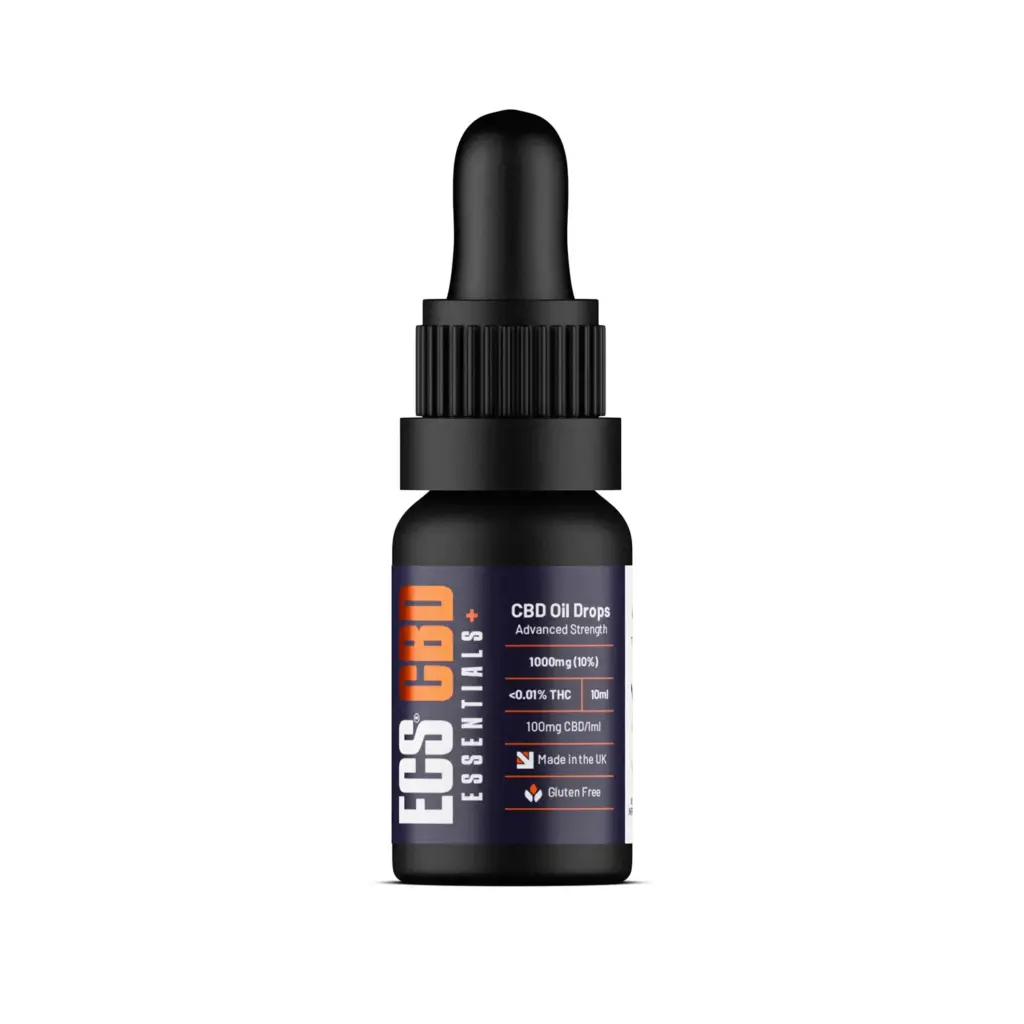
Here are additional realistic UK-style examples. A 10 ml bottle with 1,000 mg CBD contains 100 mg per ml.
A full pipette delivers 100 mg, half a pipette gives you 50 mg, and 10 drops provide approximately 50 mg. This is a high-potency product where a few drops go a long way.
A 30 ml bottle with 3,000 mg CBD contains 100 mg per ml. A full pipette equals 100 mg, half a pipette delivers 50 mg, and 10 drops give you roughly 50 mg.
With potent oils like this, you need very little volume to hit meaningful doses.
For CBD gummies and CBD capsules, the maths is simpler. Each unit comes with a fixed amount—commonly 10 mg, 20 mg, or 25 mg per gummy or capsule.
Your dose is simply the number of units multiplied by their CBD content. Two 25 mg gummies equal 50 mg. Three 10 mg capsules equal 30 mg.
This convenience is why many people prefer CBD edibles for consistent, portable dosing.
Different wellness goals often call for different dose ranges.
While evidence continues to emerge from clinical trials and real-world use, certain patterns appear across the research and anecdotal reports from CBD users.
These are common UK wellness use-cases, not official medical prescriptions.
If you have a diagnosed condition whether generalised anxiety disorder, chronic pain syndrome, or clinical insomnia speak to a doctor before relying on CBD as part of your approach.
Many people notice a calmer mood and reduced stress at low-to-medium daily doses. For most adults, somewhere between 20–50 mg per day represents a practical range for anxiety support.
For mild everyday anxiety the kind that comes with work stress or social situations starting at 20 – 25 mg daily often provides noticeable relief.
Moderate anxiety symptoms may respond better to 30 – 40 mg per day.
More severe or diagnosed anxiety disorders require medical supervision; never self-treat in place of therapy or prescribed medication.
Some human studies have used much higher amounts. A well-known public speaking study from the 2010s found that a single 300 mg dose reduced anxiety in participants facing a simulated public speaking test.
However, these are clinical settings with controlled conditions, not everyday starting points for home use. Clinical data suggests such high doses aren’t necessary for most wellness applications.
Consistency matters more than chasing high doses. Taking CBD daily for at least two weeks, rather than sporadically, gives a clearer picture of how CBD works for you.
Keep a simple journal noting mood, sleep quality, and any side effects. This tracking helps you refine your optimal dosage over time.
A practical example routine: take 15 mg in the morning with breakfast and 10 mg in the early evening, totalling 25 mg daily. After two weeks, assess whether you need to adjust upward.
Pain relief through CBD depends partly on the type and location of pain. Short-term muscle soreness, ongoing joint pain, and long-standing chronic pain each respond differently.
For mild background pain, occasional headaches, post-exercise soreness, or minor joint discomfort starting around 20–30 mg per day often proves sufficient.
You can increase by 5 mg increments if needed.
More persistent or chronic pain typically requires higher amounts. Many people managing ongoing pain end up between 30 – 60 mg daily.
However, you must remain under 70 mg/day unless a clinician advises otherwise. Self-dosing for severe pain without medical input risks masking symptoms that need proper diagnosis.
Local versus systemic use makes a significant difference. For localised joint or muscle pain, topical CBD products can deliver CBD directly to affected areas.
A high-strength CBD cream containing 1,000 mg CBD might deliver approximately 30 mg in 2–3 pumps, applied directly where it’s needed.
This bypasses the digestive system entirely, providing targeted relief.
For widespread or generalised pain, oral CBD (oils, capsules, gummies) is more appropriate since it reaches the bloodstream and affects the whole body.
Many people combine approaches, for example, 30 mg oral CBD daily plus topical CBD applied 2–3 times to painful joints.
Chronic pain should always be discussed with a GP or pain specialist, especially if you’re already using opioids, NSAIDs, or other regular medications.
CBD can interact with certain pain medications through shared liver enzyme pathways.
Sleep support often requires a moderate-to-high evening dose frequently higher than what people use for daytime calm.
This makes sense: you want sufficient CBD on board during your sleep window.
A practical guideline: start with 20 – 25 mg taken 1 – 2 hours before bed. This timing allows CBD to reach effective blood levels as you’re winding down.
If this doesn’t produce the desired effects after 3 – 4 nights, increase by 5 mg. Many adults find their sleep dose lands between 40–50 mg, still well within FSA limits when this is your only daily CBD intake.
Here’s a specific example using a strong oil. With a 3,000 mg bottle in 30 ml (100 mg per ml), half a pipette (0.5 ml) delivers 50 mg.
For many healthy adults, this represents a high but still FSA-compliant single evening dose.
CBD may help sleep when stress, racing thoughts, or physical tension are keeping you awake. However, it’s not necessarily effective when insomnia stems from untreated sleep apnoea, restless legs syndrome, or hormonal disorders.
These conditions require specific medical treatment.
Anyone experiencing long-standing or severe insomnia, more than 3 nights per week for over 3 months – should consult a doctor or sleep specialist before relying on CBD.
You want to address root causes, not just symptoms.
A sample bedtime routine: Take 40 mg of CBD oil drops approximately 90 minutes before your target bedtime.
Maintain this dose for one week, noting sleep quality and morning alertness. If improvement is minimal, increase to 50 mg the following week.
If side effects like morning grogginess appear, reduce back to 35 mg.
Different CBD formats have different absorption rates (bioavailability) and onset times. This affects how much CBD you may need and how you experience its effects.
Oils and tinctures, taken sublingually (under the tongue), offer relatively high bioavailability, roughly 13 – 19% according to pharmacokinetic studies.
Hold CBD oil drops under your tongue for 60 – 90 seconds before swallowing. Onset typically occurs within 20–45 minutes.
CBD capsules and gummies are convenient and discreet but have slower onset, 30 – 120 minutes, as they pass through your digestive system first.
Bioavailability is somewhat lower due to first-pass metabolism in the liver. You might need slightly higher doses from edibles compared to sublingual oils to achieve equivalent effects.
Topical CBD products offer high absorption into local tissues but minimal systemic effects.
They’re ideal for targeted pain relief or skin issues, not for anxiety or sleep support where you need CBD circulating throughout your body.
Here’s how product choice might look in practice. For daytime anxiety, you might use a moderate-strength CBD oil at 10–15 mg in the morning and another 10–15 mg in the afternoon, held under the tongue for maximum absorption.
For joint pain, consider 20–30 mg oral CBD daily combined with a topical CBD cream applied directly to painful areas 2–3 times per day.
The oral dose provides background support while the topical targets specific problem spots.
When selecting products, focus on mg of CBD content, not marketing terms like “extra strength” or “maximum potency.”
A 30 ml “original” bottle might contain more CBD than a 10 ml “extra strength” version. Always check total mg and calculate per-serving amounts.
Full spectrum CBD contains additional cannabinoids and terpenes from the hemp plant, which some research suggests work synergistically. If you want to understand this synergy in plain English, see our guide to the entourage effect.
Broad-spectrum CBD removes THC while retaining other compounds. If you’re weighing up THC-free options, read broad-spectrum CBD benefits without THC.
CBD isolate is pure cannabidiol only. Each has advocates, but the mg of CBD remains your primary dosing variable regardless of spectrum type.
If you want a straightforward place to start, explore our CBD oils range, including ECS Gold Drops® CBD oils, which are designed for simple daily dosing with clearly labelled mg strengths. You can also view batch transparency through ECS CBD lab reports.
Remember: hemp seed oil and CBD oil are not the same thing. Hemp seed oil comes from seeds and contains no CBD.
Essential oils are plant extracts with no cannabinoid content. Only products clearly listing mg of CBD per bottle deliver actual cannabidiol.
Safe, consistent habits are key to finding a stable, effective CBD dose. Beyond the numbers, how you approach CBD use matters for both results and safety.
The core rule bears repeating: start at 20 – 25 mg per day (or 5–10 mg for very sensitive or older adults), hold for several days, and then adjust by 5 mg steps.
Patience prevents overshooting your right dose and minimises the risk of side effects.
Keeping a simple CBD journal dramatically improves your ability to find what works. Note the date, time, dose in mg, product type, and perceived effects pain level (scale 1–10), anxiety rating, sleep quality, energy, and any unwanted effects.
After two weeks, patterns emerge that random memory simply cannot capture.
A practical journal entry might look like this: “Tuesday 14th, 8am, 15 mg CBD oil (1,500 mg/30 ml bottle), anxiety before work meeting felt calmer than usual by 9am, no side effects.
Evening 6pm, 10 mg same product, slept well, woke once.”
Assess changes over at least two weeks before deciding whether CBD is helping or whether your dose needs adjustment.
Single days tell you little; trends over time reveal whether you’ve found your ideal CBD dosage.
Every bottle of CBD oil should clearly display three things: bottle size in ml, total CBD content in mg, and CBD concentration (mg per ml or mg per serving). Without these, accurate dosing is impossible.
Check whether the product is full spectrum CBD, broad spectrum, or CBD isolate. This affects what else you’re consuming alongside pure cannabidiol.
Third-party lab reports (certificates of analysis) verify that CBD content matches label claims and confirm THC levels fall below UK legal limits.
Reputable brands make these reports easily accessible on their websites.
Studies have found up to 30% of CBD products are mislabeled, containing significantly more or less CBD than stated. Lab verification protects you from this inconsistency.
Avoid products that don’t clearly show mg of CBD per bottle or per serving. Vague labels (“proprietary hemp blend,” “CBD-rich formula” with no mg listed) make dosage recommendations meaningless.
If a company won’t tell you what’s in their product, choose a company that will.
Most people tolerate CBD well, especially at doses below 70 mg daily. However, some individuals particularly at higher doses, experience mild side effects: drowsiness, dry mouth, digestive upset, or changes in appetite. If these appear, lower your dose or stop temporarily.
CBD interacts with certain prescription medications by affecting liver enzymes (specifically the CYP450 family).
Drugs carrying a “grapefruit warning” including some statins, blood pressure medications, blood thinners, and anti-epileptics may be affected.
CBD can amplify or reduce their effects unpredictably.
Consult a doctor or pharmacist before using CBD if you are pregnant or breastfeeding, taking regular prescribed medication, or living with liver, kidney, or heart conditions, or severe mental health conditions.
This isn’t about fear, it’s about ensuring CBD complements rather than complicates your health situation.
Is CBD addictive? According to the World Health Organisation, CBD exhibits no effects indicative of abuse or dependence potential. It’s non-intoxicating and won’t make you feel high.
Taking too much CBD might cause temporary discomfort (drowsiness, stomach upset) but isn’t dangerous in the way that overdosing on some other substances would be.
That said, extreme intakes… hundreds of mg daily over extended periods, have shown elevated liver enzymes in some clinical trials (notably with Epidiolex at 10–20 mg/kg/day).
For typical UK wellness doses under 70 mg, this isn’t a realistic concern, but it reinforces why staying within recommended limits makes sense.
The bottom line: CBD is generally safe for most adults when used responsibly. Start with a low dose, track your response, stay within FSA guidance of 70 mg daily, and consult a healthcare professional if you have any doubts.
With this approach, you can explore the potential health benefits of CBD while minimising risk.
A common starting point for most healthy adults is 20–25 mg of CBD per day. Stay there for several days, then increase slowly in 5 mg steps if needed.
UK Food Standards Agency guidance advises healthy adults not to exceed 70 mg of CBD per day unless under medical supervision.
It depends on the bottle strength. Work out mg per ml (total mg ÷ ml), then mg per drop (mg per ml ÷ ~20 drops). Once you know mg per drop, divide 20 by that number.
Sublingual CBD oil (held under the tongue) commonly kicks in within 20–45 minutes. Capsules and gummies can take longer (often 30–120 minutes).
Many people split doses (morning + evening) for general wellness. If sleep support is the goal, an evening dose 1–2 hours before bed is often preferred.
Yes, it can help as a starting guide (mg per kg), but symptom severity and individual sensitivity matter too. Always stay within UK guidance.
CBD may interact with certain medications (often those with a “grapefruit warning”). If you take prescribed meds or have underlying conditions, speak with a GP or pharmacist before using CBD.
Not necessarily. Dosing is still based on mg of CBD. Full spectrum includes additional cannabinoids/terpenes, broad spectrum removes THC, and isolate is pure CBD. Your preference and tolerance decide what fits best.
Key takeaways
If you’re using CBD for stress support and want a related guide, you may find this helpful: CBD for stress in the UK.
Finding your right CBD dosage is a personal journey that rewards patience and consistency.
Use the frameworks and examples in this guide as your starting point, track your response honestly, and adjust gradually.
With the right approach, you’ll discover the dose that works for your body, your goals, and your lifestyle.
