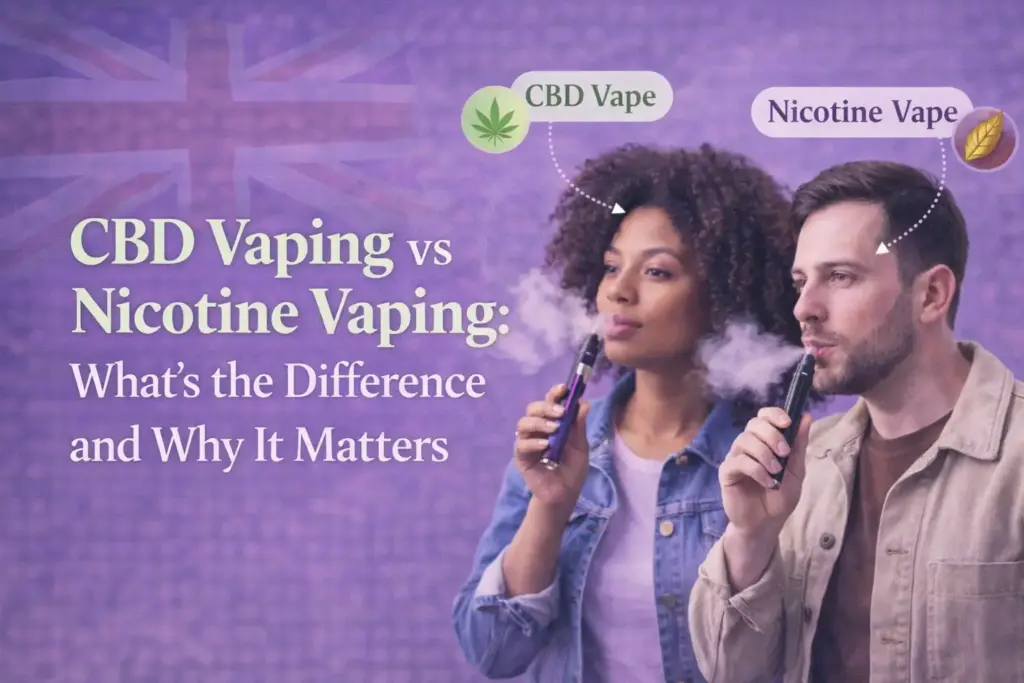
Most people think vaping is just about nicotine. But CBD vape offers a completely different experience that many people are now choosing instead.
When you compare cbd vape vs nicotine vape, the differences go far beyond ingredients. They affect habit formation, dependency, long-term use, and how vaping fits into everyday life.
This guide explores those differences in detail and explains why CBD vaping replacing nicotine is becoming a more common choice in the UK.
At first glance, CBD vapes and nicotine vapes often look identical. They use similar devices, coils, and vapour production. The purpose behind using them, however, is very different.
CBD vaping involves inhaling vapour infused with cannabidiol, a naturally occurring compound derived from hemp.
CBD is non-intoxicating and does not stimulate the reward pathways associated with addiction.
Many people use CBD vape products as part of a routine focused on calm, balance, or stress management.
Others choose CBD vaping after stopping nicotine, as a way to keep the ritual of vaping without reintroducing dependency.
CBD vapes are available as refillable e-liquids, disposable devices, and cartridges. You can explore the full range of CBD vape options designed for legal use in the UK.
Nicotine vaping is primarily designed to deliver nicotine without combustion. It is commonly used by smokers as an alternative to cigarettes or as a step-down approach.
While nicotine vapes reduce exposure to smoke-related toxins, nicotine itself remains addictive. This is why many users continue vaping long after stopping cigarettes.
For some people, nicotine vaping becomes a permanent substitute rather than a temporary aid.
The most important difference is dependency. CBD does not reinforce addictive behaviour, while nicotine is designed to satisfy and maintain it.
CBD vaping focuses on balance and control. Nicotine vaping focuses on stimulation and craving relief. Understanding this distinction is essential when deciding which path suits your goals.
Vaping is not just about chemistry. It is also about habit, routine, and behavioural cues.
Nicotine reinforces repeated use through dopamine release. This can make vaping feel necessary rather than optional.
Over time, many users find themselves vaping more frequently, not because they enjoy it, but because their body expects nicotine at regular intervals.
CBD vaping allows people to retain the familiar hand-to-mouth ritual without reinforcing nicotine dependency. This makes it appealing for those trying to step away from habitual triggers.
A small clinical study published in Addictive Behaviors observed reduced cigarette consumption among participants using inhaled CBD compared to placebo.
While research continues, this supports why some people explore CBD vape as a behavioural alternative rather than a stimulant replacement.
Health considerations are often a deciding factor when comparing CBD vape vs nicotine vape.
CBD is widely used in wellness settings for its non-intoxicating properties. Many users report feeling calmer or more settled when using CBD vape, particularly during stressful situations.
The World Health Organization has previously stated that CBD shows no evidence of abuse or dependence potential, which is relevant when comparing it to nicotine-based products.
Nicotine exposure remains the central concern with nicotine vaping. Even without smoke, dependency can persist and shape long-term behaviour.
This is why some people eventually seek alternatives that do not maintain that dependency cycle.
Your personal goals should guide your choice between CBD and nicotine vaping.
CBD vape may suit people who want a non-nicotine option, those who have already quit smoking, or those looking for a calmer vaping experience.
Beginner-friendly options such as CBD vape starter kits make it easier to explore vaping without nicotine.
CBD vapes offer a wide range of strengths, allowing users to tailor intake without escalating dependency. Guidance on selecting strength is covered in this CBD vape strength guide.
Both CBD and nicotine vapes are legal in the UK, but they are regulated differently.
CBD products must meet strict cannabinoid and safety standards, while nicotine vapes fall under tobacco and consumer protection regulations.
The growing trend of CBD vaping replacing nicotine reflects a broader shift toward non-addictive alternatives.
Understanding these differences allows you to choose a vaping option aligned with your long-term wellbeing and personal goals.
