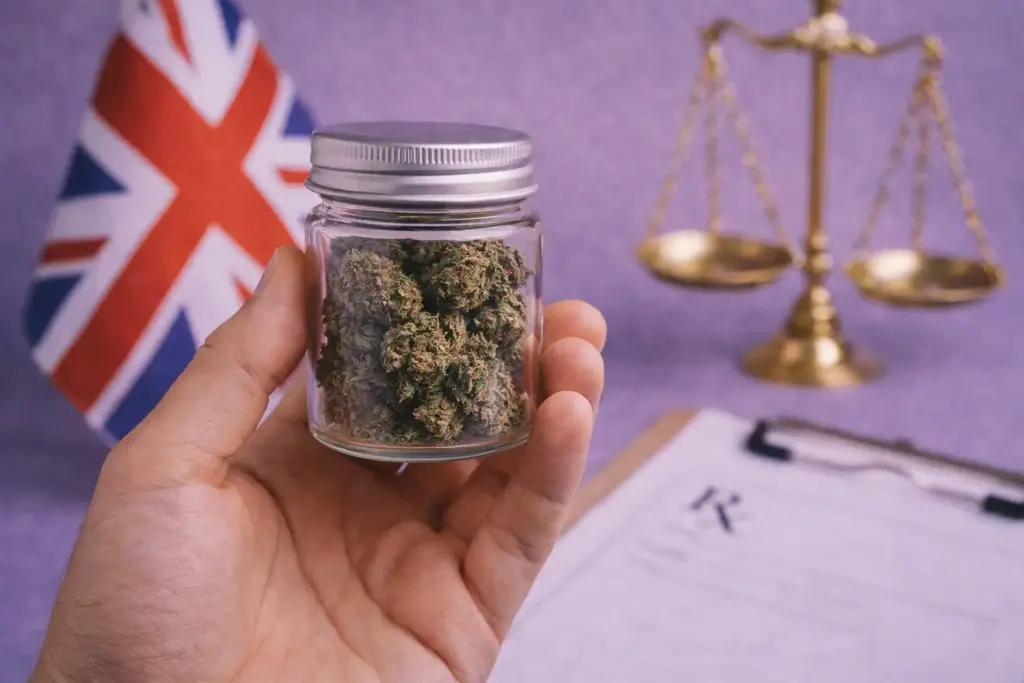
Medical cannabis in the UK remains surrounded by confusion and mixed messages. You might have heard stories that don’t quite add up or leave you wondering what’s actually allowed.
This guide cuts through the noise to explain the current legal status and what it means for you.
Keep reading to get a clear picture of medical cannabis laws in the UK.
To understand today’s laws, let’s trace the roots of medical cannabis in the UK.
Medical cannabis laws were not always a topic of discussion. Historically, cannabis was grouped with other banned substances.
This legal framework began in the early 20th century when cannabis was first restricted under the Dangerous Drugs Act of 1928.
It reflected the global stance on narcotics, focusing more on controlling abuse rather than recognising any medical potential.
The law was clear: cannabis was not to be used, regardless of the reason.
Public opinion has played a significant role in shaping the dialogue around cannabis. In the late 20th century, stories of individuals benefiting from cannabis for various health conditions began to surface.
People started questioning whether the laws were too rigid. Anecdotal evidence suggested relief for ailments like chronic pain and epilepsy, sparking conversations about its potential.
These stories prompted a gradual shift, making room for the idea that cannabis might have legitimate uses.
Fast forward to 2018, a pivotal year for medical cannabis laws in the UK.
The government made a landmark decision to reclassify cannabis-derived medicinal products, allowing them to be prescribed by specialist doctors.
This shift was in response to high-profile cases that highlighted the urgent need for change.
Today, while not freely available, these products are accessible under strict regulations, reflecting a significant step forward in cannabis legislation.
Now that we’ve explored its history, let’s look at where medical cannabis stands today in the UK.
In the UK, medical cannabis isn’t something you can just ask your GP for. It requires a specialist prescription.
This means only certain doctors, like neurologists or pain specialists, can prescribe it. They’re expected to consider all other treatment options first.
If those don’t work, medical cannabis might be an option. But it’s not a casual decision; it’s carefully considered and monitored.
Only specific cannabis-based products are approved for medical use. These products, like Epidyolex for epilepsy or Sativex for multiple sclerosis, have undergone rigorous testing.
They’re not the same as over-the-counter CBD oils, which are regulated separately and widely discussed in the UK wellness space.
This distinction is important when comparing prescription cannabis medicines with non-prescription options such as CBD oil or CBD vape products.
Medical professionals play a crucial role in the process. Their job is to assess if medical cannabis is suitable for their patients.
They weigh the benefits against potential risks. It’s not just about prescribing but also about educating patients on how to use these products safely and effectively.
This professional guidance is key to ensuring patient safety and optimal treatment outcomes.
Despite legal access, patients face hurdles that make securing medical cannabis a complex task.
Access to medical cannabis in the UK is still hindered by supply chain challenges.
Many patients report issues with getting consistent supplies of their prescribed medications. The supply chain isn’t as robust as other medications, leading to delays and shortages.
This inconsistency can be frustrating for patients relying on regular doses for managing their conditions.
The cost of medical cannabis is another significant barrier. Although it’s available on prescription, it’s not always covered by the NHS.
This means some patients face high out-of-pocket expenses.
For many, the cost can be prohibitive, making it a treatment option that feels out of reach.
It’s an ironic situation where legal access doesn’t always translate to practical access.
Not everyone qualifies for medical cannabis. The criteria are stringent. Patients must have tried other treatments without success before cannabis is considered.
This leaves some patients in a tough spot, knowing there’s a potential treatment available but not meeting the strict guidelines for access.
It’s a delicate balance between ensuring safety and providing relief.
Medical cannabis laws have a ripple effect on patients and the broader healthcare system.
Real stories highlight the impact medical cannabis can have.
These testimonials underscore the potential benefits and offer hope to others navigating long-term health conditions.
Incorporating medical cannabis into treatment plans isn’t simple. It involves adjusting existing medications and closely monitoring effects.
Some patients find it complements their current therapies, offering relief from side effects of traditional medications.
This integration requires careful planning and regular follow-up to ensure effectiveness and safety.
The healthcare system has had to adapt to these changes. There’s an increased demand for research and training on cannabis-based treatments.
Medical professionals need up-to-date information to guide their decisions.
This shift is ongoing, with the system working to balance patient needs with regulatory requirements.
For a clear explanation from the NHS read medical cannabis in the UK.
Looking ahead, the future of medical cannabis in the UK holds promise and challenges.
Changes in legislation are on the horizon. Lawmakers are considering expanding access and simplifying the prescription process.
These changes aim to make medical cannabis more accessible to those in need, while maintaining patient safety.
Public opinion continues to evolve. More people are open to the idea of medical cannabis as a legitimate treatment option.
This shift is influencing policy and encouraging further research.
As acceptance grows, so does the pressure to adapt laws to reflect public sentiment.
Research is critical to understanding cannabis’s full potential. Ongoing studies aim to uncover new medical applications and improve existing treatments.
The focus is on rigorous scientific evidence to support safe and effective use.
These initiatives are paving the way for a future where medical cannabis is a well-integrated part of healthcare.
Yes. Medical cannabis has been legal in the UK since November 2018 when cannabis-based medicinal products were rescheduled for prescription use by specialist doctors under strict regulations.
In most cases, no. NHS prescriptions for medical cannabis are rare and usually limited to a small number of severe conditions. The majority of UK patients access medical cannabis through private specialist clinics.
Medical cannabis can only be prescribed by doctors listed on the General Medical Council’s specialist register, such as neurologists or pain consultants, after other treatment options have been explored.
Eligibility varies, but medical cannabis is most commonly prescribed for chronic pain, epilepsy, multiple sclerosis, muscular skeletal conditions, and treatment-resistant symptoms where conventional therapies have failed.
Prescriptions may include dried cannabis flower for vaporisation, oral cannabis oils, capsules, or medical-grade vape cartridges. The format depends on the patient’s condition and clinical assessment.
No. Medical cannabis prescriptions may contain high levels of THC and other controlled cannabinoids, whereas UK-legal CBD products do not. CBD is regulated separately and is widely used as a non-prescription cannabinoid option in the UK.
Medical cannabis is legally available in the UK, but access is primarily through private clinics rather than the NHS.
NHS prescriptions are rare and usually limited to a small number of severe conditions where other treatments have failed.
Most patients who receive medical cannabis do so via private specialist clinics, following a consultation and formal assessment.
Prescribed medical cannabis can be supplied in several formats, depending on the patient’s needs and the clinician’s judgement.
Common forms include dried cannabis flower for vaporisation, often referred to as cannabis flos, oils for oral use, and medical-grade vape cartridges.
While Canavape is not a medical cannabis clinic, we have hands-on experience working alongside clinics, doctors, and long-term patients.
Many people navigating medical cannabis also take an interest in cannabinoids such as CBD, which is widely used in the UK and discussed in depth across our educational resources.
This overview is provided to help readers understand how medical cannabis works in practice, the formats involved, and how it sits alongside the wider cannabinoid landscape in the UK.
