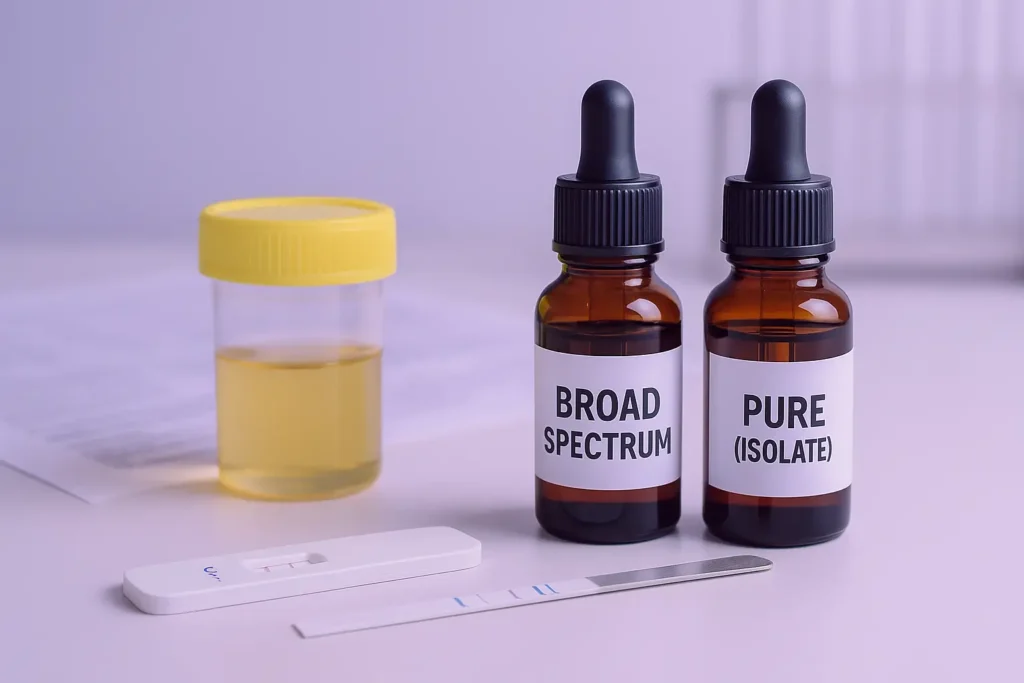
Navigating the complexities of CBD drug testing in the UK can be a daunting task, particularly with the variety of CBD products available on the market.
With terms like broad spectrum, full spectrum, and pure CBD swirling around, it is crucial to understand what each means, especially for those who wish to avoid THC.
Many individuals opt for THC-free CBD oils to ensure peace of mind, especially in the workplace.
This guide aims to shed light on the differences between these products and provide practical advice on how to read Certificates of Analysis to ensure you’re making informed decisions.
Join us as we explore the nuances of CBD products and their implications for drug testing in the UK.
Navigating the world of CBD products is essential for those concerned about drug testing in the UK.
Understanding the differences between broad spectrum CBD, full spectrum, and CBD isolate is vital to making informed choices, especially for those aiming to avoid THC.
Broad spectrum CBD includes various cannabinoids and terpenes from the cannabis plant, but crucially, it is free of THC.
This makes it a popular choice for those who wish to benefit from the entourage effect without the risk of consuming THC.
Full spectrum CBD, on the other hand, contains all the cannabinoids and terpenes, including trace amounts of THC.
This minimal THC content can be enough to show up on a drug test, making it a less appealing option for those concerned about workplace testing.
| Feature | Broad Spectrum | Full Spectrum |
|---|---|---|
| THC Content | None | Trace amounts |
| Entourage Effect | Yes | Yes |
| Suitable for Testing | More suitable | Less suitable |
Understanding these differences is key to selecting the right product for your needs. For example, Canavape’s CBD vape e-liquids are available in broad spectrum formulations that do not contain THC.
Pure CBD, often referred to as CBD isolate, is the most refined form of CBD available.
It contains no other cannabinoids or terpenes, making it an attractive option for those who strictly want to avoid THC.
CBD isolate comes in a crystalline form, which is often ground into a powder. This form is ideal for precise dosing and is often used in CBD oil drops or DIY formulations.
For those concerned about drug tests, pure CBD provides peace of mind, as it contains no THC.
This makes it a preferred choice for professionals who want to ensure they are not inadvertently consuming any banned substances.
Choosing THC-free CBD products is a priority for individuals worried about drug testing.
Products labelled as broad spectrum or pure CBD are typically safe choices for those aiming to avoid THC.
By following these steps, consumers can confidently select products that align with their needs.
Independent studies, such as this review of CBD and THC detection, confirm the importance of understanding product labelling and lab reports.
Understanding how to read a Certificate of Analysis (COA) is crucial when purchasing CBD products.
These reports are essential when selecting CBD concentrates or vape additives.
Certificates of Analysis provide a detailed breakdown of a CBD product’s contents.
They are essential for verifying the absence of THC and confirming purity levels.
A COA acts as a quality assurance document, providing consumers with the confidence that they are purchasing a THC-free product.
In the workplace, CBD use can raise concerns regarding compliance with drug policies and maintaining professional standards.
For users of CBD vape cartridges, this is particularly important, as cartridges are more often than not – full spectrum CBD oil.
For peace of mind in the workplace, CBD users should adopt a cautious approach, prioritising broad spectrum or pure CBD products and regularly checking lab reports.
For further insights, explore our CBD Vape collection for a full overview of safe options.
Yes, taking certain CBD products can cause you to fail a workplace drug test if those products contain trace amounts of tetrahydrocannabinol (THC). THC is the psychoactive compound in cannabis that UK drug tests look for, and even small amounts can trigger a positive result. If you are subject to drug testing, understanding the type of CBD you use is critical to avoiding a positive test.
To protect your career and maintain professional standards, you should avoid full-spectrum products, which naturally contain trace elements of THC. Instead, choosing high-quality broad-spectrum CBD or pure CBD isolates will drastically reduce this risk. These options are specifically manufactured to remove THC while still delivering the positive benefits of cannabinoids, helping you comply with workplace drug policies while maintaining peace of mind.
The primary difference between broad-spectrum and full-spectrum CBD is the presence of THC. Broad-spectrum CBD contains a wide variety of cannabinoids and natural terpenes from the cannabis plant, but it undergoes a refinement process to completely remove the THC. This allows users to benefit from the “entourage effect”, where multiple plant compounds work together harmoniously, without the risk of ingesting any psychoactive substances.
In contrast, full-spectrum CBD preserves all the plant’s natural cannabinoids, including trace amounts of THC. Although these THC levels are very low, they can still be detected in professional drug tests. Because of this, full-spectrum products are generally considered less suitable for individuals who face routine workplace drug screenings, whereas broad-spectrum alternatives offer a much safer pathway.
Pure CBD, which is commonly known as CBD isolate, is the most highly refined form of cannabidiol available. During processing, all other cannabinoids, plant matter, and terpenes are entirely stripped away, leaving behind only cannabidiol in a crystalline or fine powder form. Because it contains absolutely zero THC, pure CBD is highly recommended and safe for anyone concerned about passing upcoming workplace drug tests.
This refined crystalline powder is highly versatile and is frequently used to make exact CBD oil drops or customised DIY formulations. It provides ultimate peace of mind for working professionals who want to experience the health benefits of CBD without the anxiety of accidentally consuming any banned substances. It is considered the most reliable option for total THC avoidance.
Reading a Certificate of Analysis (COA) is the most reliable way to verify that your CBD product is completely free of THC. First, you should locate the COA, which reputable retailers typically publish online or supply directly with the product packaging. Next, check the detailed cannabinoid breakdown section and look specifically for the listed THC levels, ensuring they are marked as “non-detectable” or zero.
Finally, always verify the credibility of the document by checking that it was issued by an independent, third-party laboratory rather than the manufacturer itself. Reading and verifying a COA serves as your essential quality assurance. It gives you the necessary confidence that you are purchasing a genuinely THC-free product before you consume it.
You must exercise caution with CBD vape cartridges if you are subject to regular workplace drug screenings. Many pre-filled CBD vape cartridges on the market are formulated using full-spectrum CBD oil. Because full-spectrum oils naturally contain trace levels of THC, using these cartridges carries a real risk of triggering a positive result on a sensitive workplace drug test.
To stay safe and compliant with your company’s drug policies, you should adopt a cautious approach. Always check the laboratory reports for your specific vape products to confirm their exact chemical composition. Prioritise vape liquids made with broad-spectrum CBD or pure CBD isolate, which are formulated without THC, to ensure you can vape without risking your professional standing.

Message us directly
I will be back soon

